


Advanced sensors : a new era for detecting gas leaks


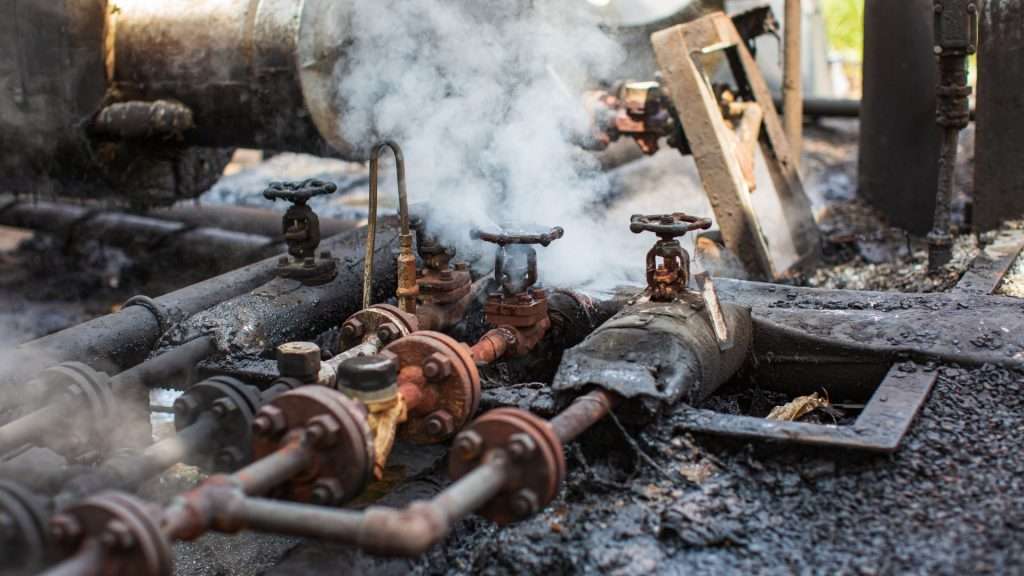
The safety of sensitive industrial sites, such as nuclear power plants in France, is a major concern. In this era of innovation, groundbreaking solutions are emerging to address these critical challenges. Among them, the use of advanced sensors mounted on tethered balloons marks the beginning of a new era for detecting gas leaks with unprecedented precision, while reducing the carbon footprint of surveillance technologies.
The challenges of gas leak detection
Gas leaks, although rare, can have disastrous consequences, both environmentally and for human safety. These incidents present specific challenges for nuclear power plants in France and other Seveso sites, where every anomaly has the potential to become critical. Until now, detection methods have relied on fixed equipment, often limited in range and responsiveness.
Tethered balloons, equipped with advanced sensors and controlled by artificial intelligence, are changing the game by enabling continuous and dynamic monitoring, even over large areas.


the role of tethered balloons in the technological revolution
Tethered airships, like our Horus solution, fly over sensitive sites carrying groundbreaking sensors capable of detecting the presence of gas with unmatched precision. These sensors measure, in real time, parameters such as:
the concentration of hazardous gases
variations in atmospheric pressure
thermal changes that may indicate an anomaly
Thanks to their elevated position, these tethered balloons provide a wide-angle view, making it possible to quickly locate a leak—even in hard-to-reach areas.
artificial intelligence serving safety
The power of the artificial intelligence (AI) embedded in these systems lies in their ability to instantly analyze the collected data. Here’s how AI enhances gas leak detection:
Predictive analysis: algorithms detect anomalies before they become critical
Reduced false alarms: advanced sensors, combined with AI, distinguish natural variations from real warning signals
Real-time mapping: a gas leak is immediately located and tracked, enabling rapid intervention


reducing the carbon footprint with sustainable solutions
In addition to improving safety, these innovations support more environmentally friendly monitoring:
Reduced indirect emissions: unlike drones or surveillance vehicles, tethered balloons consume minimal energy
Simplified maintenance: onboard equipment requires less human intervention, reducing travel and energy costs
Eco-friendly compatibility: advanced sensors use non-invasive technologies that respect local ecosystems
These advantages align solutions like Horus with the sustainability goals of industrial sites—especially nuclear power plants in France, where managing environmental impact is a top priority.
a technology tailored to the needs of nuclear power plants in france
With over 50 operational nuclear reactors, France is a global leader in nuclear energy production. Nuclear power plants in France require cutting-edge solutions to ensure maximum safety and minimal carbon footprint.
Tethered airships equipped with advanced sensors perfectly meet these needs by offering:
proactive detection of anomalies
wide and continuous coverage of critical infrastructure
an innovative solution that complies with strict industrial and environmental safety standards


At Lium, we’re proud to contribute to this revolution with our Horus solution, which combines innovation, performance, and environmental responsibility. Together, let’s build a safer and more sustainable future—for nuclear power plants in France and far beyond.
Want to learn more about our advanced detection solutions ?
To discover how our tethered balloon can transform the security of your sensitive site.
Also worth reading
- Aerial surveillance : from kites to intelligent automata juin 25, 2025
- Why a balloon and not a drone ? mai 20, 2025
- 5 common misconceptions about industrial surveillance mai 7, 2025